Drain Cleaning & Unclogging
Open slow sinks, tubs, laundry lines and yard drains, and find out why the blockage came back.
A cable pokes a hole through a blockage, while jetting washes the full pipe wall. If a line clogs every few years, or a cable stalled partway, jetting may be the better tool.
Mention what has been tried before, including how far a cable went.
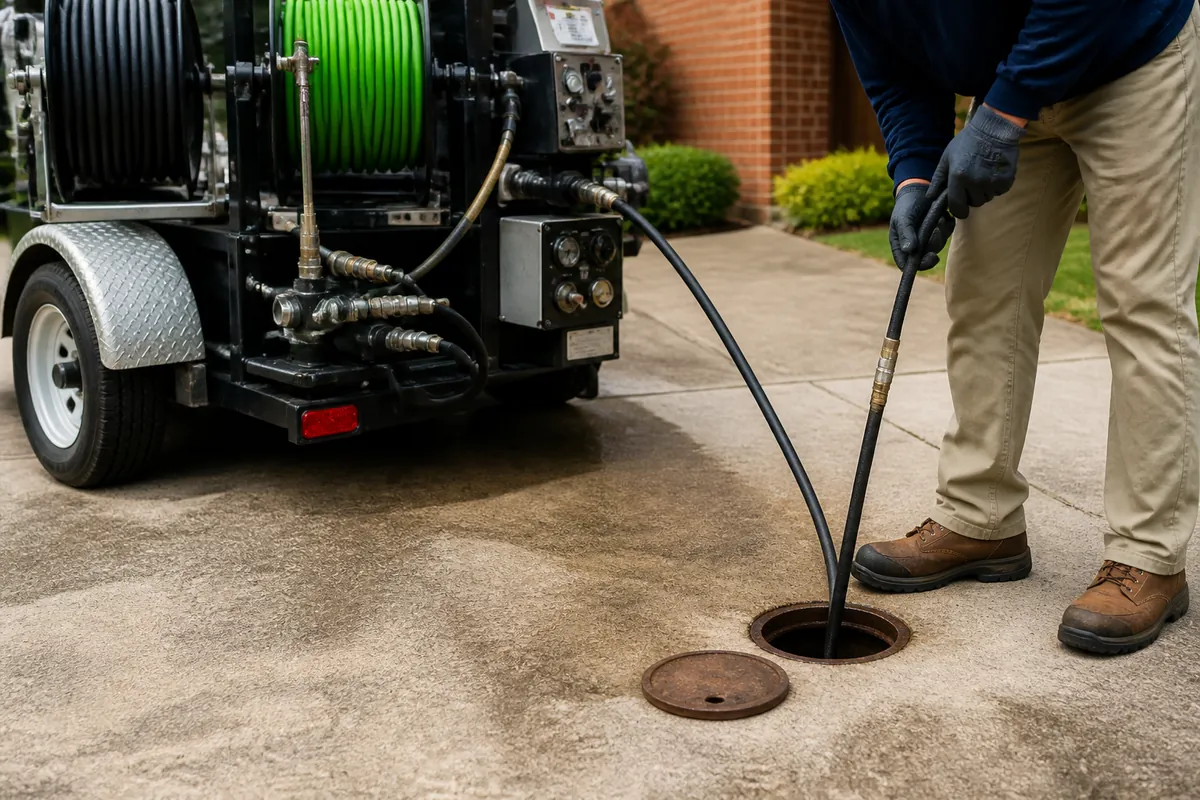
A cable bores through a blockage and leaves a hole. Water jetting uses a nozzle on a hose that sprays high-pressure water in all directions, scouring the pipe wall as it moves.
That makes jetting a good fit for grease, scale and soft roots. It is less suited to a collapsed pipe or a hard obstruction, where a camera and a repair are needed.
Jetting a damaged pipe can make things worse, so a camera look often comes before or alongside the cleaning. The camera shows cracks, offsets and roots, and helps decide whether to jet, cable or repair.
Ask whether the contractor includes a camera pass, and whether you can see the footage.
The price of jetting follows the length of the line, the time it takes and the equipment required.
Ask whether the price covers one pass or a full cleaning and a camera look.
Phoenix water is hard, and scale lines the inside of drain pipe over time. Jetting can clean that scale off, which helps in older homes with rough pipe.
Cabling is more usual than jetting for a simple clog, so ask why the contractor suggests jetting for your line.
The contractor opens an access point, such as a cleanout, and feeds the hose into the line. Water is used, and some contractors recover debris. Ask where the water and debris will go.
Gas smells that seem to come from the drains can sometimes trace to buildup in the line, which jetting may clear. A persistent odor after cleaning points to another cause.
Apartment buildings, shops and restaurants run long lines with heavy use. Jetting is often part of their maintenance. Tell the dispatcher about the building, the line size and any prior problems.
Jetting suits lines that keep filling back up with the same kind of buildup.
A hose with a specialty nozzle feeds into the line. Pressurized water jets from the nozzle, scours the pipe wall and flushes debris downstream. Most contractors run a camera before and after so the result is visible.
The pipe decides the nozzle and the pressure. Ask which pressure the contractor uses and how they handle old clay, cast iron or thin plastic.
Jetting cleans a pipe that is intact. If the pipe is broken or sagging, cleaning is only a pause, and sewer line repair is the lasting answer.
Find the cleanout, a capped pipe beside the house or at the property line, and clear the space around it for the technician. Tell the dispatcher how many fixtures are backing up and since when.
Open slow sinks, tubs, laundry lines and yard drains, and find out why the blockage came back.
See inside the line before a repair, before a purchase or after clogs keep returning.
Cracked, rooted or bellied sewer pipe, fixed in one spot or along a longer stretch.
It hinges on the condition of the pipe. A camera look beforehand helps judge whether jetting is wise.
It varies with the line and the access. Ask for a quote that says what is included.
It can clear soft roots from the line. Thick roots or roots in a cracked pipe may need cutting and a repair.
Only as often as the pipe calls for it. If a line clogs every two or three years, it may be a candidate.
Call at night or on a weekend. If the main is backing up this minute, say so, and the dispatcher looks for a contractor with an opening. The contractor's calendar sets the timing.
They do different jobs. Cabling opens a path, while jetting cleans the pipe wall.
Used wrongly, it can stress weak pipe. A camera look first helps the contractor choose.
Yes. See commercial plumbing for what to share about the property.
Call and share the history. The dispatcher can connect you with a contractor who offers jetting.
Service area centered on Laveen and nearby Maricopa County cities.