Water Heater Installation & Replacement
A failed tank swapped for a new one, with sizing, fuel, placement and permit questions sorted out.
A cold shower, a puddle on the garage floor or a rumble from the tank all say the heater needs attention. Some faults take a quick fix, while a leaking tank usually means replacement. Shut off a tank that is leaking onto a garage or closet floor, then report it.
Mention whether the heater runs on gas or electricity and where it sits. That decides what the contractor loads onto the truck.
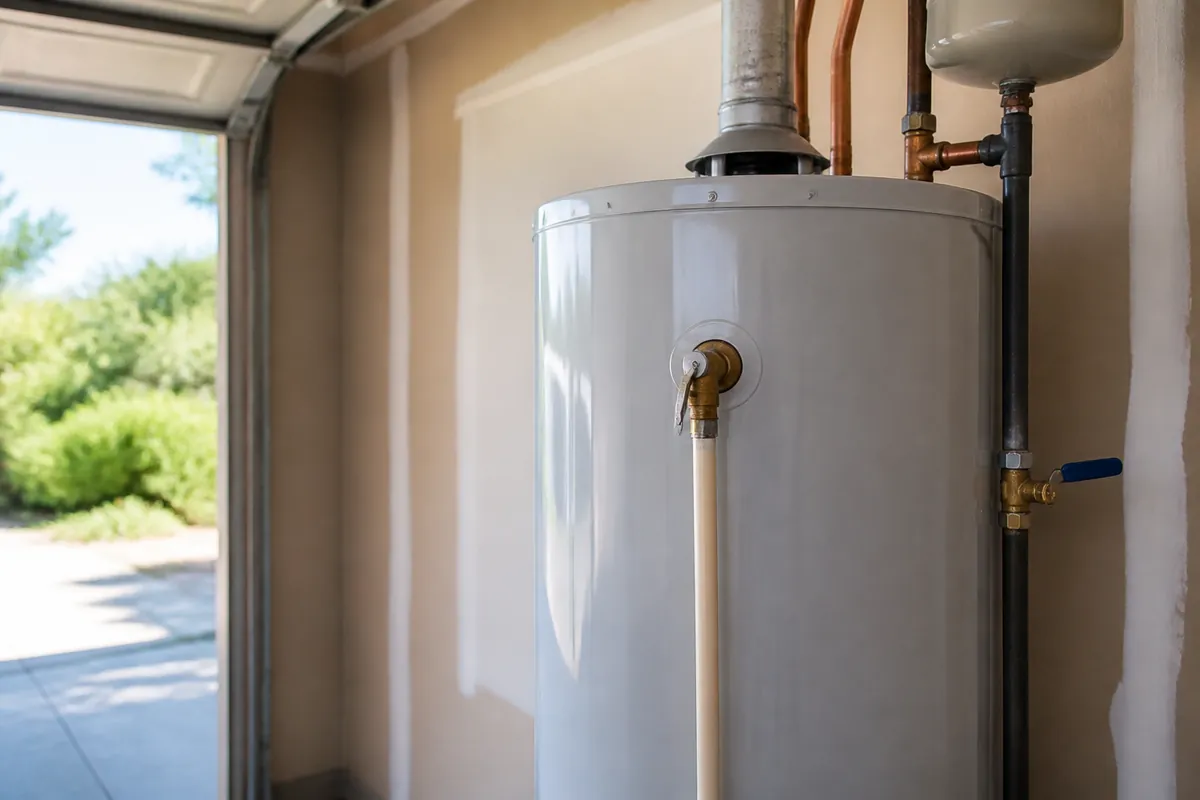
Check the source before assuming the worst. Water at a supply or relief valve, at the drain valve or at a pipe fitting can often be repaired. Water seeping from the bottom of the tank, or running down the sides, means the tank itself has failed.
Shut the cold supply valve above the heater, cut the power or gas control and put a pan beneath the unit. Then phone and say where the water is showing.
On an electric heater, the usual suspects are a tripped breaker, a burned out element or a faulty thermostat. On a gas heater, a pilot that keeps dying, a worn thermocouple or a dirty burner are common.
Do not relight a gas pilot if you smell gas. Leave the area and call the gas utility from outside.
Phoenix water is hard, and the minerals settle as sediment in the bottom of a tank. Sediment can cause popping noises, reduce efficiency and shorten the life of the tank. Flushing a tank on a schedule can help.
Garage heaters spend summers in high heat, which is hard on rubber seals and plastic parts. Check fittings and the drain pan when you inspect the heater.
Repair costs depend on the part and the access. These factors change the bill.
Get a clear quote before work begins, and ask what the visit fee includes.
A heater that is only a few years old and has a failed part is usually worth repairing. A tank around fifteen years old with corrosion at the base is usually past it. The contractor should say plainly which case you have.
If replacement is likely, ask about size, fuel type and whether a permit is needed. The installation page covers those choices.
Location changes the damage when a heater fails. One in the attic can soak ceilings below, and one in a closet can wet carpet. A drain pan piped to the outside limits that risk.
If a leak has already reached drywall, the ceiling and wall leak page explains what comes next.
Heaters give warning before they fail. These are the usual ones.
A bad thermostat, element or igniter is a modest repair. A tank that is leaking from the shell is at the end of its life. Age matters too, and the label near the bottom usually shows a date code.
Ask the contractor what they would do and why. If a repair would only buy a short time, replacing may make more sense. See water heater replacement for what that involves.
The Valley's hard water builds scale on tank floors and elements. Flushing the tank and swapping the anode rod can extend its life. A softener helps in the long run.
Close the cold supply to the heater and cut power or gas. Slide a pan underneath. A leak at the top fittings may be fixable, while a leak from the tank itself means planning a replacement.
A failed tank swapped for a new one, with sizing, fuel, placement and permit questions sorted out.
Flush, descale, repair or replace a tankless unit, including heat pump hybrids.
Trace a stained ceiling, bubbling paint or a damp wall back to the pipe or drain that caused it.
A bottom leak usually means the tank has corroded through. A contractor can confirm and discuss replacement.
Many reach ten to fifteen years, depending on the water and the upkeep. Age is one input when deciding between repair and replacement.
Check the breaker or the pilot. If both are fine, a failed element, thermostat or igniter is likely.
It can come from a reaction inside the tank. A contractor can check the anode rod and the tank.
Yes. The line is staffed around the clock. Cold water in the morning is one thing, but a leaking tank is urgent, so shut off the cold supply above the heater and say so.
Close the cold supply and switch off power or the gas control, then set a pan beneath it. A slow drip may hold for a few hours, while a steady stream should be reported at once.
A tripped breaker, failed element or pilot issue are common. The dispatcher can talk through it.
It varies. Age and water quality both matter.
Yes, if water is spreading. Shut off the supply and call.
Close the supply and the power, then call. Mention where the water shows and which type of heater you own.
Service area centered on Laveen and nearby Maricopa County cities.