Sewer Line Repair
Cracked, rooted or bellied sewer pipe, fixed in one spot or along a longer stretch.
When a sewer lateral is cracked, collapsed or sagging along a long stretch, repair may not hold. Replacement installs new pipe from the house to the connection point.
A camera look first helps decide whether replacement is needed.
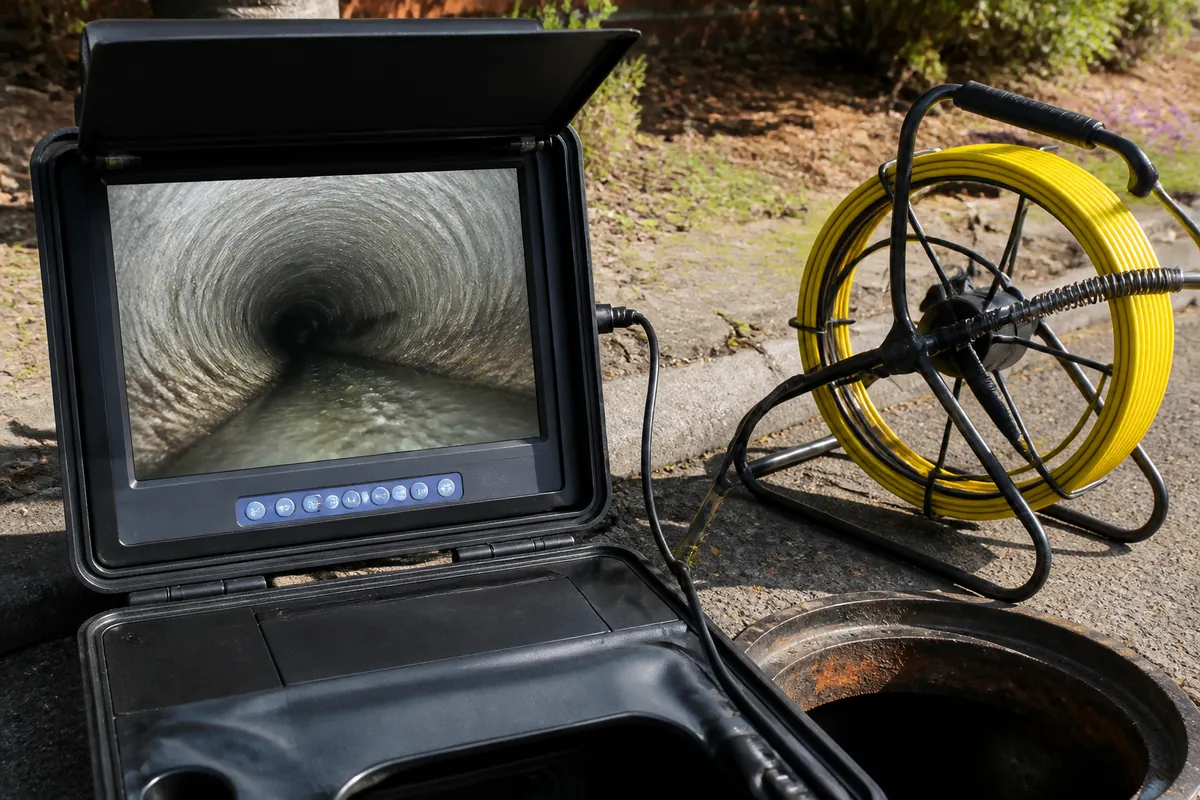
Open trench replacement digs along the pipe path and lays new pipe. Trenchless approaches such as pipe bursting pull new pipe through the old route with less digging.
Not every line suits trenchless work. Pipe condition, depth and fittings all matter. Ask the contractor to explain what fits yours.
The plan covers the route, the connection points, permits and the restoration of whatever is above the pipe. Ask what will be disturbed, including landscaping, concrete and fencing.
Before any digging, Arizona 811 should be called so underground utilities are marked.
Some Laveen properties have long laterals. A longer pipe means more digging or more pipe to pull, which affects both the plan and the quote.
Check where the owner's responsibility ends and the city's begins before you scope the job.
Replacement is a larger job, and the price follows the length and the method.
Get the scope and what is excluded in writing.
Camera footage, a written scope and more than one opinion help. Ask what happens if the contractor finds more damage once the work begins.
A final camera pass can confirm the new line, and the inspection closes the permit. Keep the paperwork for the future.
Replacing the pipe makes sense when it is failing along most of its length.
Open trench work pulls out the old pipe and lays a new one on the same path. Trenchless work starts from small pits. One method draws new pipe through while bursting the old, and another lines the inside of the old pipe.
The best choice depends on depth, pipe condition, obstacles and local rules. A driveway or a large tree often favors trenchless work. Ask the contractor to show why they chose their method.
A clear quote lists the length, method, pipe material, permit plan and restoration work. Compare each line, not only the total.
Expect limited water use while the line is out. Ask how long the house will go without a working sewer and whether a temporary arrangement exists. An earlier camera inspection gives the plan a solid base.
Cracked, rooted or bellied sewer pipe, fixed in one spot or along a longer stretch.
See inside the line before a repair, before a purchase or after clogs keep returning.
Act fast when several drains back up together or sewage rises in a tub or floor drain.
When the pipe is collapsed, badly offset or failing along much of its length.
Not always. It can reduce digging, but suitability and cost vary.
That depends on length, depth and the method chosen. Ask for a time window.
Usually. Ask who pulls it.
Call in. Replacement is planned work, but active backups come first, and the dispatcher can put you in touch with a contractor for the urgent step.
That depends on the material and installation. Ask the contractor what they use.
Sometimes. A camera shows whether the rest is healthy.
Ownership often ends at a boundary near the property line. Your provider can confirm.
Call and describe what you know. The dispatcher can connect you with a contractor.
Service area centered on Laveen and nearby Maricopa County cities.