Faucet & Sink Repair
Drips, stuck handles, balky stop valves, washer boxes and hose bibs.
A toilet that runs, rocks, leaks around the base or flushes feebly can usually be fixed. Sometimes the part costs little, and sometimes the toilet has simply worn out. If the bowl is rising or water is collecting around the base, close the wall valve before anything else.
Tell the dispatcher whether the toilet is running, leaking, clogged or broken.
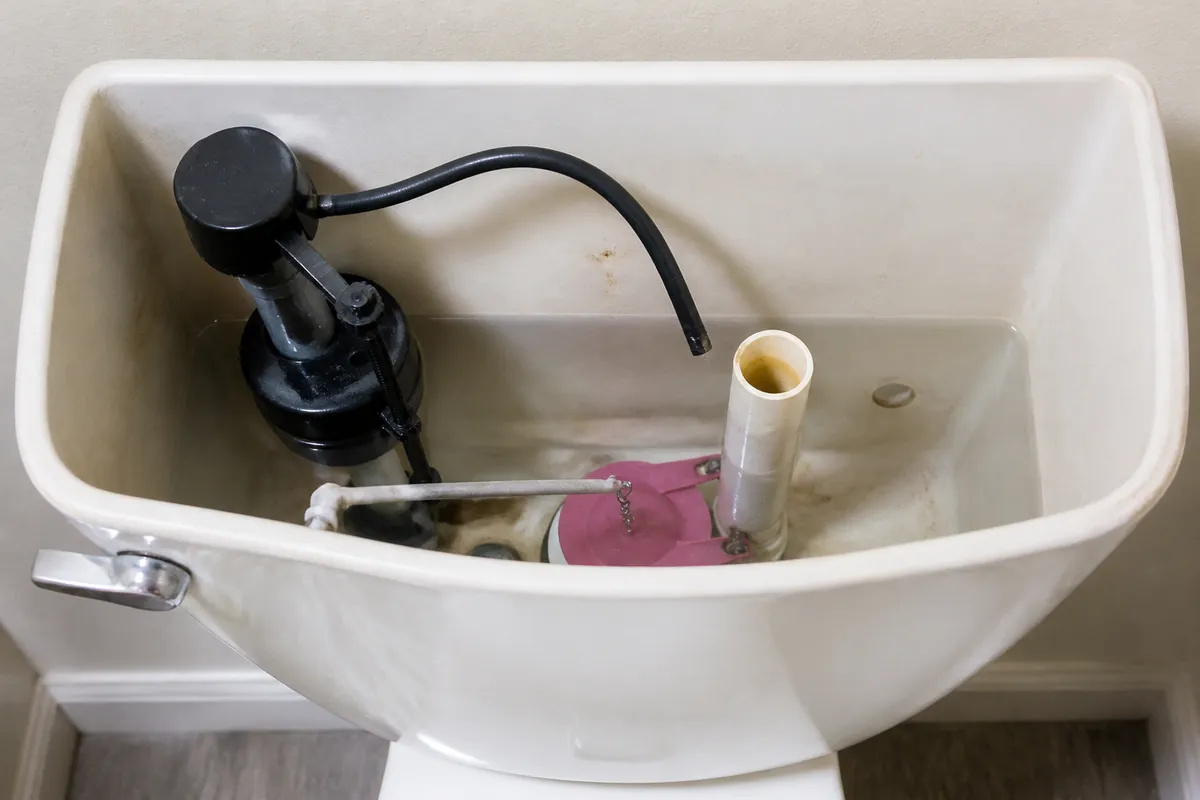
A flapper that does not seal, a fill valve that sticks or a float set too high can let water trickle for days. The meter shows it, and so does the bill.
Parts like these are cheap and quick to swap. If a repair does not hold, the contractor can check whether the tank or the bowl is worn.
Water at the base often means a failed wax ring or loose bolts. A wax ring is replaced by lifting the toilet and setting it again.
Water at the wall can mean a worn supply line or valve. Replacing the supply line and the shutoff valve is a short job.
Toilet work ranges from a small part to a full replacement.
Ask what the quote includes, such as the toilet, the supply line and haul-away.
Hard water leaves scale on flush valves and fill parts. That is a common reason that flappers fail and fill valves stick.
A weak flush can come from a partly blocked jet or a clog in the trap. If more than one toilet gurgles, the problem is the main line, not the bowl.
A toilet that backs up when other fixtures run points to the shared drain.
Replacement is worth considering for a cracked bowl, a toilet that has needed repeated repairs or one that flushes poorly. Ask about elongated or round bowls, comfort height and the rough-in measurement.
A contractor can remove the old toilet, set the new one and check for leaks.
A toilet usually warns you before it fails outright.
Close the wall valve behind the toilet. Mop up water and keep the fan on. Do not keep flushing an overflowing bowl. If the flange is damaged or water is leaking into the ceiling below, call right away.
If several fixtures are slow, the issue may be the main line. See drain cleaning for that.
Drips, stuck handles, balky stop valves, washer boxes and hose bibs.
Open slow sinks, tubs, laundry lines and yard drains, and find out why the blockage came back.
Act fast when several drains back up together or sewage rises in a tub or floor drain.
A worn flapper or a fill valve is the usual cause.
Water at the base and a wobbly toilet are common signs.
Ask on the call.
It may be a partial clog or a main line problem.
Take off the tank lid, press the flapper shut and rotate the wall valve clockwise. Dry the floor, run the exhaust fan and call the 24/7 line if the blockage is more than you can clear.
Ask on the call. The dispatcher can share what is offered.
A leaking flapper is common.
It can be. Close the valve and call.
Close the wall valve and call. Say what the water is doing.
Service area centered on Laveen and nearby Maricopa County cities.