Toilet Repair & Installation
Running, rocking, leaking or weak flushing toilets repaired, or a new bowl set.
A dripping spout, a stuck handle, a leaking shutoff valve and a hose bib that will not close are small plumbing jobs that can waste a lot of water. A tap that will not close should be stopped at its own shutoff valve, then reported.
Say which fixture is leaking and whether you can close its shutoff valve.
Most modern faucets use a cartridge that wears over time. When a cartridge fails, the handle may stick, the water may drip or the temperature may drift. Replacing the cartridge is a quick repair.
If the faucet body is corroded, replacing the faucet is usually better. Ask the contractor which is worth doing.
Angle stops and supply valves under sinks and behind toilets can crack, seize or leak. A valve that will not close can turn a small repair into a flood.
Replacing a shutoff valve takes only a short time when the main is closed.
Sun and heat bake outdoor spigots and hoses. Plastic handles crack and washers harden. A spigot that drips is worth fixing, since it adds to the water bill.
Fixture repair is usually a small job, and the part decides the price.
Ask for the quote before the visit.
A shower valve that leaks or a tub knob that is stripped may need a new cartridge or valve body. A laundry hookup or a utility sink can leak at its valves.
Appliance lines, such as a refrigerator water line or a dishwasher connection, are also common calls.
Hose bibs wear out and drip. A leaking spigot outside can run for weeks. Ask about adding frost protection if needed, though freezes are rare in the Valley.
Small leaks add up on the water bill.
Close the shutoff under the sink or at the main. Empty the cabinet and place a bowl under the leak. Note whether the leak is at the spout, the handle or the pipes below.
If the leak is at the drain, see drain cleaning for slow draining as well.
Faucets fall into four main designs: compression, ball, cartridge and ceramic disc. Compression faucets have separate hot and cold handles with washers that wear out. Ball and cartridge types are single-handle and leak when seals or cartridges fail. Ceramic disc models are durable but can be affected by mineral buildup. Knowing the type tells you which part to replace.
A brand name and model number on the faucet or under the sink can help you find parts. If the faucet is old or the finish is worn, a new one may cost about the same as repairing it.
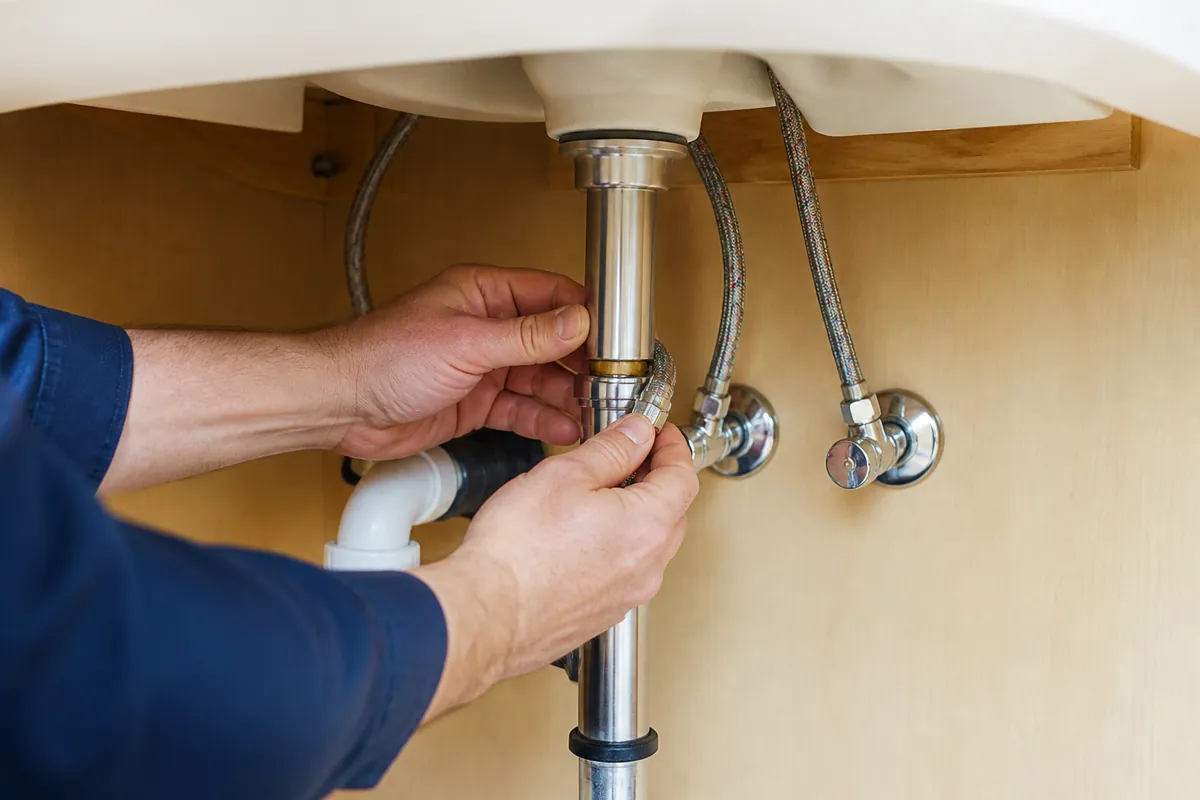
Check the shutoff valves and supply lines. A valve that weeps at the stem, a braided line with rust at the nut and a drain trap with a loose slip nut are common sources of drips. Snug fittings gradually, a quarter turn per attempt, since too much force cracks them. Holding dry paper towel under each joint shows which one is actually wet.
Hard water leaves scale on valve stems and washers, so a shutoff that has not been used for years may not turn or may leak when moved. If it will not close, a replacement is better than forcing it.
If every fixture is weak, the issue is not at the faucet and a pressure check is the next step.
Running, rocking, leaking or weak flushing toilets repaired, or a new bowl set.
A seized grinder cleared, a leak stopped or a fresh unit mounted.
Shower, tub and valve replacements, tub leak repair and correct drain rough in.
Often yes. A cartridge or a valve is usually the cause.
It can be. Close the main if it will not hold.
Ask on the call.
A worn washer or a failed stem is common.
A steady spray or a supply line that has come apart is. Shut the valve under the sink and call at any hour. A slow drip can generally wait until daytime.
It can be when water reaches a cabinet or the floor. Turn the valve beneath the sink clockwise, or close the main, then call. A worn cartridge or stripped stem is a frequent cause.
Often yes. Ask on the call.
A new cartridge may be enough. A corroded body may call for replacement.
A partial clog is common.
Close the shutoff valve and call. Say which fixture is leaking.
Service area centered on Laveen and nearby Maricopa County cities.