Faucet & Sink Repair
Drips, stuck handles, balky stop valves, washer boxes and hose bibs.
A leaking shower valve, a tub that drains slowly or a shower you want replaced are jobs that depend on the wall behind them. A plumber works from the drain, the valve and the water test.
Tell the dispatcher what is wrong and whether water has reached the floor below.
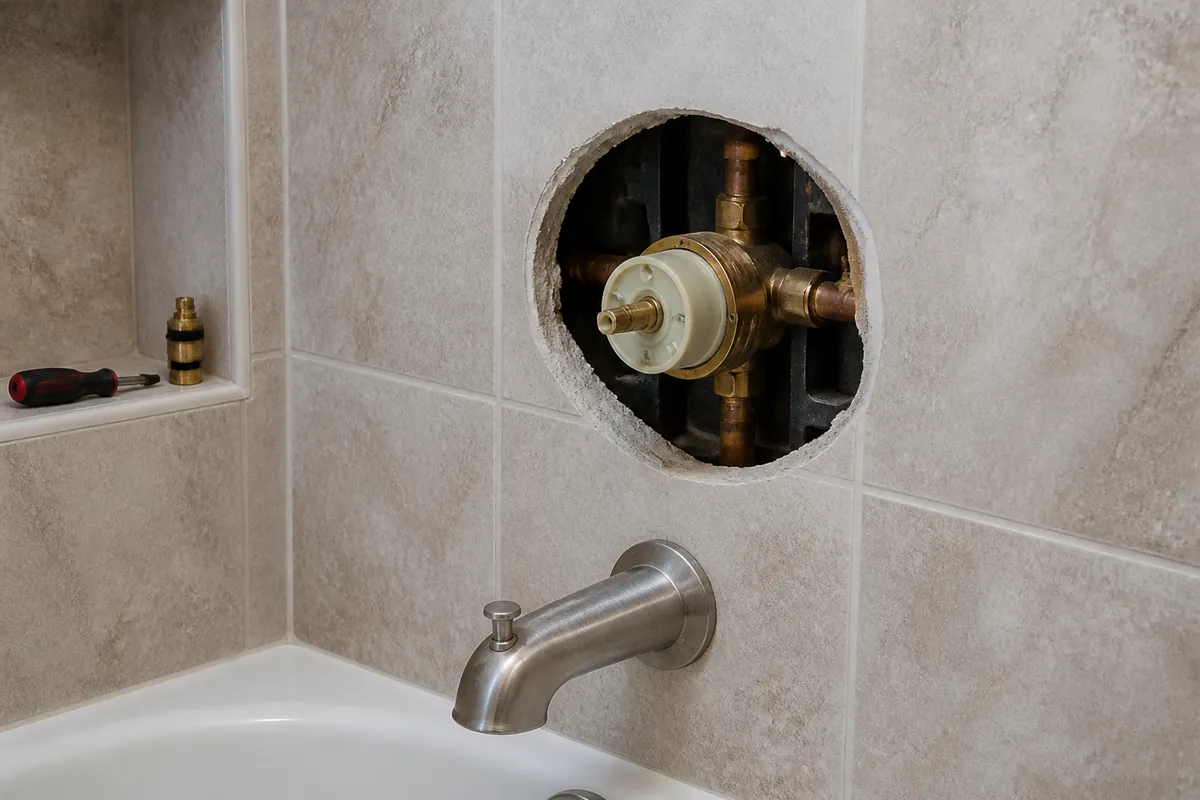
A shower valve that drips or will not shut off often needs a new cartridge. A stripped handle may need a new stem. If the valve body is corroded, it is replaced.
A leaking tub drain, a cracked pan or a failed seal can soak the floor and the ceiling below. A water test shows where the leak is.
If a leak has run for a while, ask about moisture and mold.
Many two-story homes have bathrooms above living areas. A leak at an upstairs tub can stain a ceiling below.
Cost depends on the scope.
Ask who handles the finish work.
A replacement starts with the drain and the valve. The plumber sets the drain, connects the supply and tests for leaks before the surround goes in.
Tile and finish work belong to other trades, so ask who covers them.
Remodels need new drains, vents and valves. Ask how the plumber will coordinate with the builder.
Bath problems often hide behind the wall.
Decide on the layout first. Moving a drain or valve adds work. Tell the dispatcher whether you want a like for like swap or a remodel. Ask who handles tile, surround and waterproofing.
If water has reached the room below, see ceiling and wall leak repair.
A shower or tub valve controls mixing of hot and cold water. Modern valves often use a cartridge with pressure balancing or thermostatic control to limit sudden temperature swings. Replacing a worn cartridge can fix drips and handles that stick. A full valve replacement usually requires access from behind the wall, which means opening the wall or working from an access panel.
The drain is just as important. A shower pan must slope to the drain and hold water without leaking. A tub needs a properly vented trap. Errors in these parts show up as slow drains, gurgling or damp ceilings below.
Caulk and grout cracks let water behind the tile or tub surround. A stained ceiling below a bathroom, soft flooring near the tub and mold at the base of a wall are signs. Test whether the leak is from the drain by plugging it and filling the tub, then watching for changes below. Test the spray area separately. A contractor can narrow the cause by testing in stages.
Small gaps can be re-caulked after drying. A failing pan or a cracked tub requires more work. See ceiling and wall leak repair when damage has spread.
Replacing a tub with a shower or the reverse changes drain and valve locations. Size, access, wall material, ventilation and permits all affect the schedule. Ask whether demolition, disposal, tile work and patching are part of the price. Decide on the valve type before the walls are closed, since changing it afterward is costly.
Drips, stuck handles, balky stop valves, washer boxes and hose bibs.
Trace a stained ceiling, bubbling paint or a damp wall back to the pipe or drain that caused it.
Running, rocking, leaking or weak flushing toilets repaired, or a new bowl set.
A worn cartridge or a corroded valve body is common.
Ask on the call and describe the job.
Stop using it and call.
Often it is a clog, and a drain cleaning may help.
Yes. Close the supply or the main valve, then call. Planned replacements are booked for daytime, while an active leak is treated as urgent.
Ask on the call and share the plans.
A clog or hair buildup is common.
Sometimes. Replacement is often cleaner.
Stop using it and call. Say where the water appears.
Service area centered on Laveen and nearby Maricopa County cities.