Water Heater Repair
Sort out leaks, lukewarm showers, popping noises, pilot trouble and tripped breakers.
Replacing a heater is a chance to fix the size, the location and the fuel type, not just to swap a tank. A good plan also covers venting, drain pans and permits.
Tell the dispatcher the current heater's fuel, size and location.
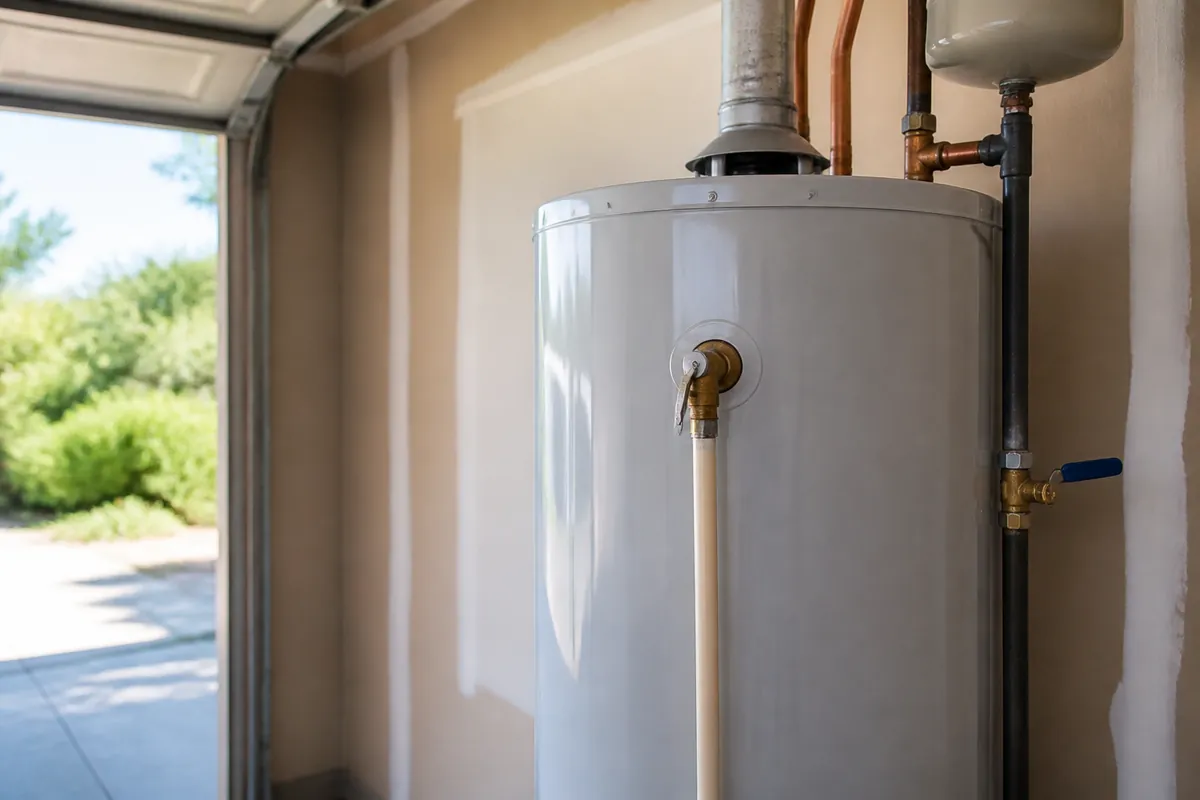
An undersized tank runs out of hot water, and an oversized one wastes energy. The usual guide is household size plus the hours when hot water is used, such as morning showers and evening laundry.
Ask the contractor to explain the sizing. A fair answer counts the people in the home and the fixtures that run at the same time.
Swapping gas for electric, or a tank for a heat pump model, changes wiring, venting and floor space. A hybrid heat pump unit needs clearance and a place for its condensate. Some owners move from a gas heater to a heat pump unit to cut running costs.
Ask what the swap involves, and whether wiring or a vent change is needed.
A replacement price is a package of equipment, labor and code items.
Ask for the full scope, including haul-away and permit costs.
Many Valley homes keep heaters in garages, and summer heat adds to the load on the tank and the parts around it. A drain pan and a relief line to a safe spot are worth discussing.
Hard water cuts tank life short. Ask whether a softener or a scheduled flush suits your house.
Many jurisdictions require a permit for a heater replacement. Ask who pulls it. Typical extras include a drain pan, a relief valve line, an expansion tank and new shutoff valves.
If a heater vents through an old chimney, ask whether it needs rerouting.
Relocating a unit means new supply lines, new venting and possibly new gas or electrical runs. Ask whether the plan includes patching and whether the code allows the new spot.
Replacing sooner than later avoids a flooded garage.
Tank capacity follows the number of users and the timing of their use. A larger family with overlapping showers needs more. A tankless unit suits certain homes, and tankless service explains the service side.
Fuel type matters. Gas units need venting and a gas supply. Electric units need the right circuit. Ask what the swap requires in your home.
Many jurisdictions require a permit for a heater swap. Ask who pulls it and what inspection follows.
Many tank swaps finish in a single visit if the unit is in stock. Same-day work is not guaranteed. Ask the dispatcher what is possible for your home, and mention if you have no hot water at all.
Sort out leaks, lukewarm showers, popping noises, pilot trouble and tripped breakers.
Flush, descale, repair or replace a tankless unit, including heat pump hybrids.
New softener setups, plus help when a unit stalls, leaks or runs over.
A like for like swap often fits in one visit, but a change of fuel or location takes more time.
In many places it does. Ask the contractor who handles the paperwork.
Often, but it may need new wiring and a vent change. The contractor can assess the house.
It depends on household size and demand. Ask the contractor to explain the sizing.
Ask on the call, including nights and weekends. Many tank swaps finish in one visit, and the contractor's schedule and stock decide how soon.
Ask for a written scope that lists the heater, fittings, venting and haul-away.
Ask on the call. Availability varies.
Many swaps take part of a day. The scope decides.
Call and give the fuel type, size and location of the heater.
Service area centered on Laveen and nearby Maricopa County cities.