Water Filtration Installation
Add a whole house or kitchen filter for taste, sediment or reverse osmosis drinking water.
Hard water leaves spots, scale and stiff laundry. A softener fixes that when it works, and a softener that stopped regenerating or started leaking needs attention.
Have the brand, the age and a description of what the unit is doing.
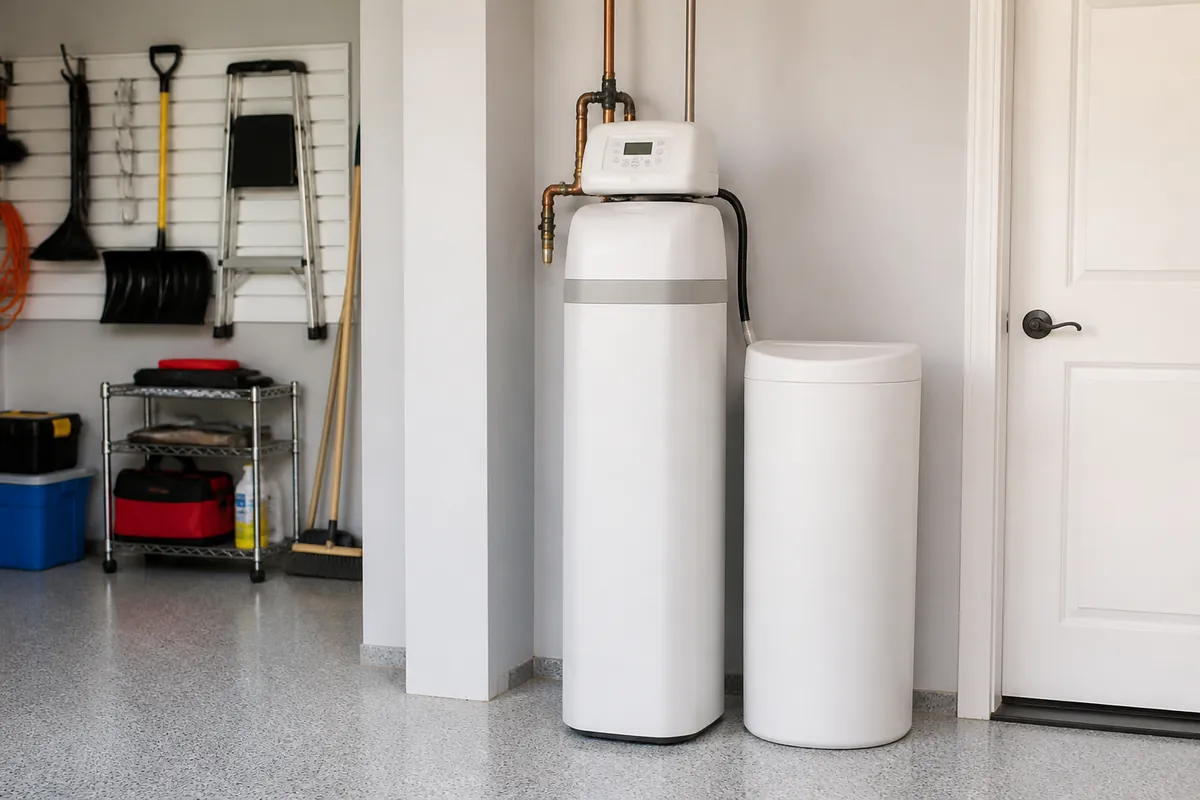
A softener exchanges hardness minerals for sodium or potassium and then rinses itself with brine. It treats the whole house, which protects pipes, heaters and fixtures.
A control valve that fails to cycle, a clogged injector, a bad seal or a brine line leak account for many calls. A unit that sat unused may need a rebuild.
Hardware damage during construction, such as a cut regeneration pipe, can also stop a softener.
Pricing depends on the system and the site.
Ask for the unit price, installation and any recurring costs.
Phoenix reports total hardness near 172 to 302 milligrams per liter, about 10 to 17.6 grains per gallon. That counts as hard water, and scale is a steady headache for heaters and fixtures.
Installation involves a bypass valve, a drain connection and power. Ask where the discharge goes and whether local rules limit it.
A contractor can also say whether a salt-free scale reducer is a better fit for your goals.
A softener does not remove everything. Taste and odor concerns call for a filter.
The Valley has hard water, and the effects show up around the house.
A softener exchanges hardness minerals for sodium or potassium as water passes through a bed of resin. It cleans itself on a timer with a brine rinse, and the salt or potassium must be added from time to time.
Ask the contractor about sizing, regeneration settings and drain requirements. A softener needs a drain nearby and a power outlet.
Common service items include a resin bed that is tired, a stuck valve or a clogged injector. A unit that stops regenerating may have a control fault.
A softener handles hardness, while a filtration system targets taste and other contaminants. Many homes consider both. Ask what you want to solve and let the contractor explain.
A softener is sized by the amount of hardness it must remove between regenerations, based on household size and water hardness. A unit that is too small regenerates too often and wears sooner. A unit that is too large may waste salt. Placement needs a nearby drain for the regeneration discharge, an electrical outlet and space for a brine tank.
Most softeners are installed where the main supply enters the house, so every fixture receives treated water. Outdoor spigots are often left on untreated water to avoid wasting softened water on the yard.
A softener that stops softening may have run out of salt, formed a salt bridge in the brine tank, fouled its resin or lost power to the controller. Overflow or a constant drain flow can point to a stuck valve or a control fault. Hard water that returns after the unit is serviced may mean the bypass valve is open.
Check the salt level and break up any crust gently. Look at the controller for error codes and write them down for the contractor.
Regeneration uses brine to flush hardness minerals from the resin and sends the wastewater to a drain. Some areas limit softener discharge, so ask about local rules. Potassium can replace sodium for those who prefer it, though it costs more. Keep an eye on salt use. A big change may mean the settings need adjustment. See water filtration installation for taste, odor and sediment concerns that a softener does not address.
Add a whole house or kitchen filter for taste, sediment or reverse osmosis drinking water.
Flush, descale, repair or replace a tankless unit, including heat pump hybrids.
A failed tank swapped for a new one, with sizing, fuel, placement and permit questions sorted out.
Common causes are a failed control, a clogged injector or a salt bridge. A contractor can check.
No. An overflow points to a valve or float problem.
Phoenix water is hard. Whether you want a softener is a preference.
Ask on the call and give the model.
Put the unit in bypass or shut its supply valve, then call. The line is open at every hour.
Not by itself. A filter targets that.
It depends on use and hardness. The contractor can estimate.
Ask on the call and name the brand.
Call and describe it. The dispatcher can connect you with a contractor.
Service area centered on Laveen and nearby Maricopa County cities.