Water Softener Installation & Repair
New softener setups, plus help when a unit stalls, leaks or runs over.
If your faucets crust over and your glasses spot, you are not imagining it. Phoenix reports hard water, and that hardness leaves a mark on almost everything the water touches.
By the Laveen AZ Plumbing team ·
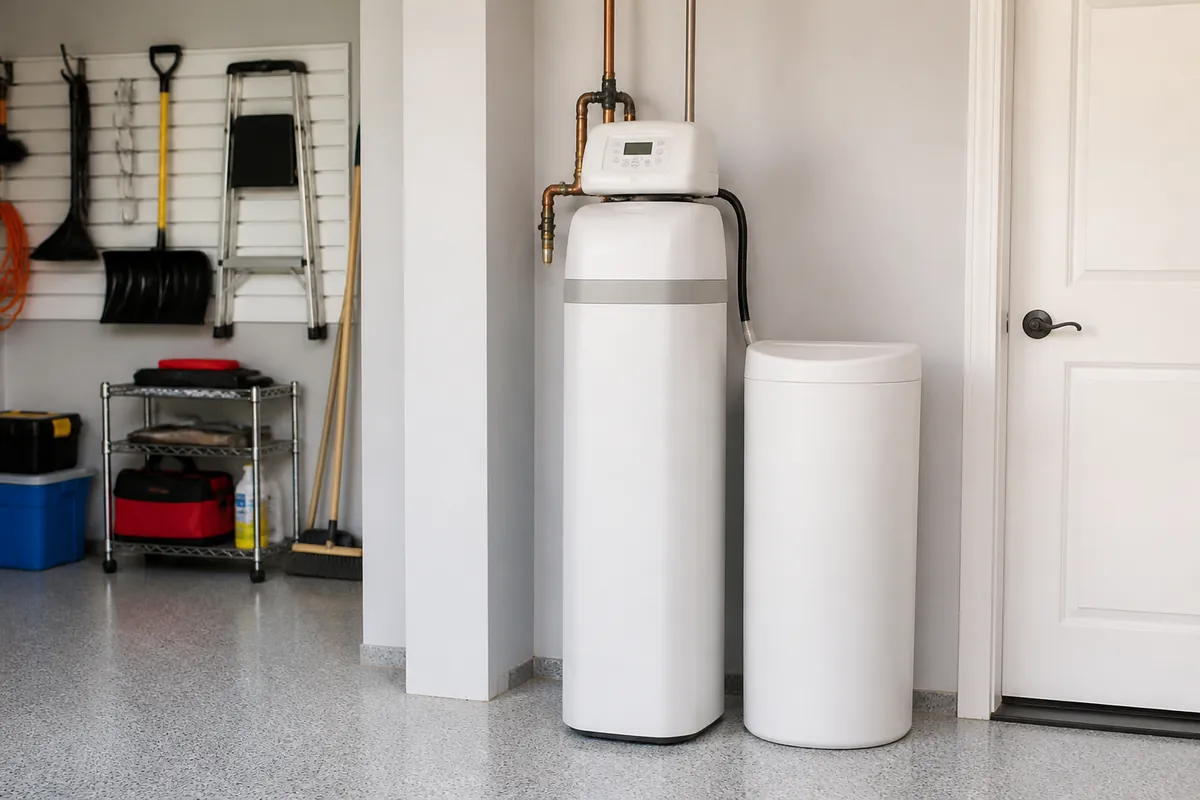
The City of Phoenix lists total hardness from about 172 to 302 parts per million, which is about 10 to 17.6 grains per gallon. Its report says hardness comes from calcium and magnesium picked up from soil, and that it can scale pipes, water heaters and fixtures.
Hardness is not a health issue under the standards the report cites. It is a wear and maintenance issue.
White crust forms on faucets and showerheads. Spots stay on glass and tile. Kettles and coffee makers scale quickly, and dishwashers and washing machines work harder.
Inside the walls, scale narrows pipes. Over years, low flow becomes a complaint.
Heat makes minerals fall out of the water and settle on the tank bottom or on an element. The scale insulates the heating surface, so the unit works harder and may rumble. Elements can burn out sooner.
Flushing a tank and replacing the anode rod help. See water heater repair for what a check involves.
Different parts of the house suffer in different ways.
| Place | What scale does | What helps |
|---|---|---|
| Faucets and showerheads | Crust and low flow | Vinegar soak, regular cleaning |
| Tank water heater | Rumbling, shorter element life | Flushing and anode checks |
| Tankless heater | Blocked passages | Descaling service |
| Whole house | Crust everywhere | Softener |
Tankless heaters have narrow passages that scale can block. Many makers call for periodic descaling. See tankless service for that.
A softener trades hardness minerals for sodium or potassium and shields pipes and fixtures. It needs salt, a drain and a power outlet. A filter handles taste and other contaminants but does not remove hardness.
Compare softener installation with filtration based on what you want to fix.
Soak showerheads and aerators in vinegar every few months. Wipe fixtures dry after use. Flush a tank heater once a year, following the maker's guidance.
Hardness is the amount of dissolved calcium and magnesium in water. When water is heated or evaporates, these minerals come out of solution and form scale. Phoenix's water quality report lists hardness from about 10 to 17.6 grains per gallon, which falls in the hard to very hard range by common water treatment scales.
Your own tap may fall anywhere in that range depending on the source mix at the time. The utility publishes a report each year, and a simple test kit from a hardware store gives a rough reading at home.
The most visible places are faucets, showerheads and the glass of shower doors. Less visible is the inside of the water heater. Scale collects on the tank floor and on electric elements, which makes the heater work harder and can lead to popping or rumbling sounds. Inside pipes, scale narrows the passage over many years. It also coats the valves and cartridges in faucets, which can make handles stiff or cause drips.
Dishwashers, washing machines and ice makers collect scale too, and many manufacturers note that hard water can shorten appliance life. Check the manual for your own models.
White vinegar dissolves light scale on aerators and showerheads. Soak the part in a bag or bowl for a few hours, then scrub. Do not use vinegar on natural stone, and check a fixture's finish instructions before soaking. For a tank heater, flushing sediment from the drain valve once a year is a common maintenance practice, as described in many manufacturer guides.
Treatment addresses the cause. A salt-based softener exchanges hardness minerals for sodium or potassium. Other devices make different claims, and their performance varies, so ask for clear information about how a given system works. See water softener installation and repair and water filtration installation for the difference between softening and filtering.
A tankless heater has narrow passages in its heat exchanger, and scale can restrict them. Manufacturers often recommend periodic descaling, and hard water raises the importance of doing it. See tankless water heater service.
A softener is not required in every home, and some owners prefer to accept scale and clean as needed. The right choice depends on the household, the fixtures and the budget.
Inside a tank heater, scale does its quiet damage. Minerals drop to the floor of the tank and build a crust between the burner or element and the water, so the heater runs longer for the same result. That can push energy use up and wear parts sooner. Draining a few gallons from the drain valve each year, as many manufacturer guides suggest, clears loose sediment. If the valve is clogged with scale, stop and call rather than forcing it.
Replacing the anode rod is another routine step on many tanks. It is usually done by a technician, since the rod is on top and the tank must be handled carefully. See water heater repair for what a service visit usually covers.
Ask what the system removes, how it is rated and what upkeep it needs. Ask where the drain line goes and how much water it uses to regenerate. Ask about the salt or potassium supply and how often it must be refilled. Ask whether local rules affect where softener discharge can go, since some areas restrict it. Compare answers from more than one source before deciding.
A good installer will ask about your household size, your fixtures and your water test results. A vague answer or a sales pitch that skips those questions is worth a second opinion.
Some households choose to manage scale instead. A routine of wiping glass after showers, soaking aerators, using a descaler in the kettle and flushing the heater helps. Choose a showerhead that is easy to take apart. Keep a spare set of washers for faucets that drip. This approach costs less but takes regular effort, and it does not protect hidden surfaces such as the heater and the inside of pipes.
The city report treats it as an aesthetic issue, not a health standard.
No. A filter does that.
It depends on how much scale bothers you. Ask a contractor what fits your home.
Scale on the tank bottom can cause popping noises.
New softener setups, plus help when a unit stalls, leaks or runs over.
Sort out leaks, lukewarm showers, popping noises, pilot trouble and tripped breakers.
Add a whole house or kitchen filter for taste, sediment or reverse osmosis drinking water.
Water collecting beneath the tank usually comes from either a loose connection or a tank that has worn out. Settle which one it is before deciding what to do.
A trickle at one faucet and a trickle at every faucet are different problems, and each has its own short list of causes.
A hose bib that drips can also leak inside the wall. Work out whether the handle, the spout or the wall connection is at fault.
Call and tell the dispatcher what you see. A contractor can be arranged from there.
Service area centered on Laveen and nearby Maricopa County cities.