Water Heater Repair
Sort out leaks, lukewarm showers, popping noises, pilot trouble and tripped breakers.
Water under a heater is one of the more stressful plumbing sights. Some leaks are a ten minute fix. Others mean the tank has reached the end, and the sooner you know which, the less water you clean up.
By the Laveen AZ Plumbing team ·
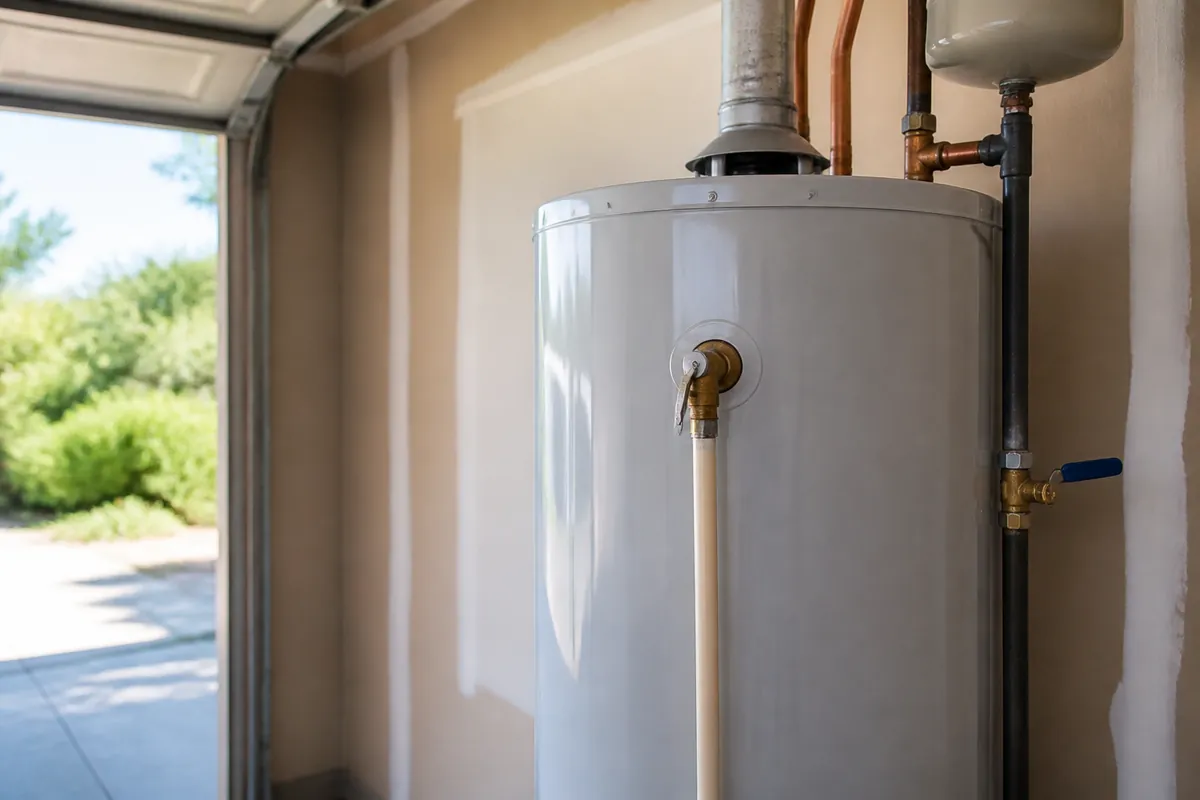
Close the cold water valve on top of the heater. Electric models need their breaker switched off, and gas models need the control set to pilot or off. Slide a pan or some towels beneath the tank.
If a lot of water is on the floor, close the main house valve as well. Keep an eye on nearby outlets and do not walk through standing water if power is on.
Dry the area and watch. A drip from the top may come from the supply or hot connections. A drip near the side may be the temperature relief valve or its discharge pipe. Water at the very bottom may come from the drain valve, or from the tank itself.
A loose drain valve or a worn fitting can often be tightened or replaced. Water coming through the tank shell is not a repair job.
Inside a tank, the steel is protected by a rod that corrodes first. Once it is spent, the tank itself begins to corrode. Hard water speeds the trouble because scale builds on the bottom and traps heat.
Phoenix's own report lists hardness from about 10 to 17.6 grains per gallon. That is firmly in hard water territory, and it explains why many local tanks fail with scale deposits.
The location of the drip points to the likely cause.
| Location | Likely cause | Usual path |
|---|---|---|
| Top fittings | Loose or worn connection | Tighten or replace the fitting |
| Side valve or its pipe | Relief valve discharge | Measure pressure, then replace the valve |
| Drain valve at the base | Worn or loose drain valve | Replace the valve |
| Through the tank shell | Failed tank | Replace the heater |
Fittings, relief valves and drain valves are modest repairs. Ask the contractor what they see and why. If the leak is from the shell, or the tank is old, replacement makes sense. See water heater repair and water heater replacement for details.
The label near the bottom usually shows a date code. Share it on the call, since age shapes the advice.
Heaters in a garage or closet drain onto concrete, which hides slow leaks. Heaters in an attic can ruin a ceiling. A drain pan and a pipe to the outside help, and some jurisdictions require them. Ask the contractor what applies where you live.
Flush the tank on a schedule and ask about the anode rod. A softener reduces scale at the source. Test the relief valve once a year by lifting the lever briefly, with a bucket in place.
Inside a steel tank is a glass lining and a sacrificial anode rod that is meant to corrode instead of the steel. When the rod is consumed, the tank wall begins to rust. Sediment from mineral-rich water collects on the floor of the tank, traps heat and speeds up the damage. Rust eventually opens a path, and water seeps out near the bottom, often from a seam rather than a single hole.
Phoenix area water is hard, and scale builds quickly. That is a common reason tanks reach the end of their service life sooner than the paperwork suggests. A noisy tank that pops or rumbles is often a warning that sediment is building up.
Several parts sit near the base and can drip without a tank failure. The drain valve may weep if it is loose or has a worn washer. The temperature and pressure relief valve discharges through a pipe, and if that pipe ends near the floor, water on the ground may be coming from the valve. Condensation on a gas unit's flue or on cold supply pipes can also leave a puddle on humid days.
A simple test is to dry the area, wrap tissue around each fitting and see which one turns damp first. If the wet spot is on the underside of the shell itself, the tank is the culprit.
A leaking fitting, drain valve or relief valve can usually be replaced. A leaking shell cannot be sealed in any lasting way. If the tank is near the end of its service life, replacement is the practical path. Questions of size, fuel type, venting and permits are covered under water heater installation and replacement.
Some owners consider a tankless unit when a tank fails. That is a bigger change than a straight swap, and tankless service explains maintenance needs such as descaling that come with it in hard water.
Water in a garage is manageable. Water in a closet or an interior hallway can soak drywall and flooring quickly. Lift stored boxes off the floor, set a pan or towels beneath the tank and wet vacuum any standing water. If walls or carpet got wet, begin drying within a day or two to keep mold from taking hold. See water damage restoration for what that involves.
Do not run a leaking electric unit with the breaker on if water is near the element wiring. Turn the power off first and handle any gas control only as the label directs.
Leave the relief valve and its discharge pipe alone, and never cap them. Gas odor near a leaking unit means getting outside and calling 911 or the gas company from there. Wet wiring can shock, so cut the breaker only while standing on something dry. Keep kids and pets clear and move anything flammable away from the heater.
If water is spreading, yes. Shut off the supply and power, then call.
No, a leak through the tank shell means the tank itself is failing.
That may be the relief valve discharge. It can mean high pressure or temperature, or a worn valve.
Soon after a shell leak. Ask the dispatcher about timing.
Sort out leaks, lukewarm showers, popping noises, pilot trouble and tripped breakers.
A failed tank swapped for a new one, with sizing, fuel, placement and permit questions sorted out.
New softener setups, plus help when a unit stalls, leaks or runs over.
Valley tap water carries a lot of dissolved minerals. See how the scale builds up and what slows it down.
Locate the shutoff while nothing is wrong. This guide shows common hiding places and how to close the valve without breaking it.
That bang when a tap closes is water hammer. It can be fixed, and it is worth fixing before fittings loosen.
Turn off the supply and call. A dispatcher will find a local contractor for you.
Service area centered on Laveen and nearby Maricopa County cities.