Leak Detection
Locate water escaping from walls, floors, the yard or irrigation pipe without tearing things open first.
Most leaks never drip onto the floor. They run inside a wall, under a slab or beneath the yard. A short, careful routine can tell you whether water is leaving and which part of the property to suspect.
By the Laveen AZ Plumbing team ·
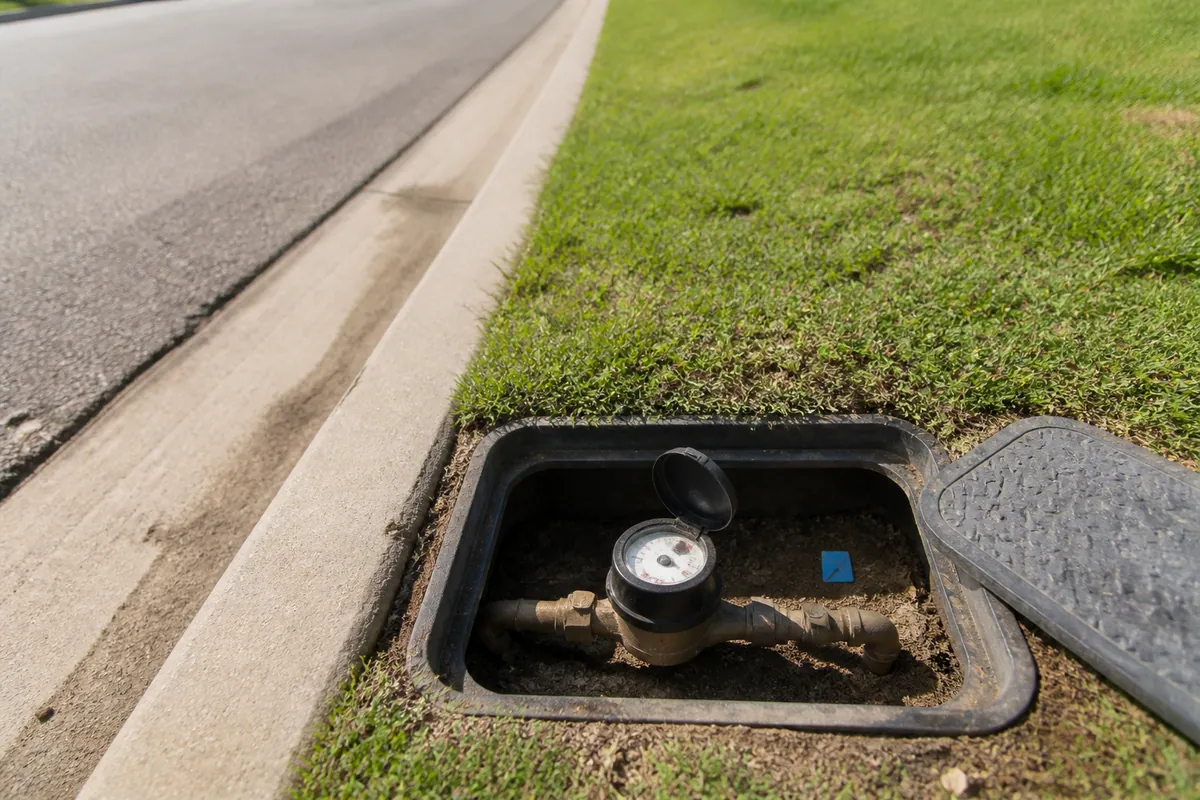
The meter is usually in a box near the street. Open the lid and find the small dial or triangle that moves whenever water flows. Of all the clues available, it is the most reliable.
Close all taps, the ice maker and the sprinkler timer, and confirm the washer and dishwasher are not running. Take a photo of the dial, leave the house alone for twenty minutes, then compare. If the dial or triangle has moved, water is getting out somewhere.
Phoenix lists its own responsibility as ending at the meter, so a meter that moves with the house off is your problem to chase.
Find the main valve where the pipe enters the house, close it all the way and run the meter check once more. If the dial stops, the leak is in the plumbing inside the house. If it keeps turning, the leak is on the pipe between the meter and the house.
That one test halves the search area. Note which result you got, because a contractor will ask first and the answer saves time on the phone.
A toilet is the classic source of silent water loss. Tint the tank water with food coloring, wait a quarter hour and keep your hands off the handle. If the bowl picks up the color, the flapper is leaking. The fix is often small, and toilet repair covers it.
Next, look at the water heater, the softener, the evaporative cooler line and the pool fill valve. Each can leak without leaving a visible puddle. A damp spot under any of them is worth a photo.
Two quick meter readings narrow the search before anyone arrives.
| Meter result | Where the leak likely is | Next step |
|---|---|---|
| Dial stops with the house valve closed | Inside the house plumbing | Test toilets and fixtures, then search walls |
| Dial keeps moving with the valve closed | Pipe between the meter and the house | Walk the yard and book a search |
| Dial is still with all water off | No active leak right now | Watch the bill and test again later |
On a dry day, walk the path from the meter to the house. Look for soft soil, an unusually green strip of grass or a patch that stays dark. Listen too, because a faint hiss near the entry point can reveal a pressurized leak.
Irrigation lines look like plumbing leaks. A stuck valve or a broken sprinkler line can run for days. Turn the controller off and run the meter test again before you assume the worst.
Press along baseboards and the lower wall near bathrooms and the kitchen. Check ceilings under upstairs bathrooms and open cabinet doors to see the supply lines. A warm patch of floor can mean a hot water line beneath the slab.
A stain that grows or keeps coming back is a strong clue. A stain that stays the same may be old. Take dated photos so you can compare over a few days.
If the meter moves and the toilet test passes, a trained search is the sensible step. Contractors use listening gear, thermal cameras, pressure tests and pipe cameras, depending on what the pipe is made of and where the leak seems to be. Leak detection explains how the visit works.
Ask which method will be used and whether the spot gets marked. A good answer links the method to your pipe type. Raise repair too, since water line repair and wall repairs are quoted separately in many cases.
If water is visible, shut the main valve, move belongings off damp areas and take photos. A bulging ceiling needs a bucket below it and people out of the room. When floors or walls are soaked, water damage restoration handles the drying.
Most residential meters show two things: a sweep dial or a small triangle that reacts to even a trickle, and a register of digits that counts total use. The digits are good for comparing one reading against the next. The triangle or low-flow dial is the better tool for a leak test, because it moves when only a few cups an hour pass through.
Write down the register reading before bed and again before the first use of water in the morning. If the number rose overnight and nobody ran a fixture, something is leaking or an automatic device is cycling. Ice makers, softeners that regenerate at night and irrigation timers are the usual non-leak explanations, so check them before assuming the worst.
A leak on the hot side often hides longer, because the sound is muted and the loss is small. A few clues help. A water heater that seems to run more often than it used to may be heating water that is escaping. A floor that is warm in one spot can mean a hot line is running beneath it. Turning off the heater's cold supply for a short time and watching the meter can separate the heater and its connections from the rest of the house.
If the meter stops with the heater isolated, the leak is on the heater side. If it keeps moving, the cold lines or the buried supply are more likely. See water heater repair for the common leak points on the tank itself.
Not every leak leaves a stain. Paint that bubbles on an interior wall, baseboards that swell at the bottom, a musty smell in a closet and tiles that sound hollow or feel loose are all signs of moisture that has been present for a while. Bare feet are useful too: a patch of slab that is cooler or warmer than its neighbors deserves a second look.
In the yard, watch the sprinkler valve boxes and the area around the meter. A box that always holds water, even when the system has not run, can point to a leak in a valve or in the line that feeds it. A dark, soft strip of ground running toward the house is another clue worth reporting.
Skip the temptation to cut open drywall on a guess. A hole in the wrong place costs money and may not reveal anything, because water travels along pipes and framing before it shows itself. Listening, metering and pressure testing narrow the search first. A professional search uses these same steps along with specialized listening gear, and the result is a mark on the surface rather than a trench of exploratory holes.
Do not ignore a suspected leak for weeks while you wait to see whether the bill drops. Even a small one adds up, and a pinhole in a pressurized pipe can grow. Take the meter reading, call, and describe what you found.
Yes. Pipes in walls, under slabs and under the yard can lose water without a visible puddle. The meter test shows it.
Twenty minutes is a practical minimum. Longer gives a clearer result if the leak is very small.
Phoenix says the owner handles problems after the meter. Other providers set their own boundary, so ask yours.
Most likely the leak sits on the pipe between the meter and the house. A search can locate it before anyone digs.
Locate water escaping from walls, floors, the yard or irrigation pipe without tearing things open first.
Learn whether a bill spike comes from a leak, a toilet or the sprinklers, and how to confirm it at the meter.
Fixes for the buried line between the meter and the house, from a single failed joint to a full new run.
Sudden bill jumps rarely have one cause. Compare leaks, heavy use, sprinklers and billing quirks to see which fits.
Warm spots on the floor, a faint hiss and a restless meter are all signs that a pipe may be leaking under the concrete.
Locate the shutoff while nothing is wrong. This guide shows common hiding places and how to close the valve without breaking it.
Call and report what the meter did. The dispatcher can then find a local contractor.
Service area centered on Laveen and nearby Maricopa County cities.