Pool Leak Detection & Repair
Find out if the pool is losing water to a leak or to the sun, and pin down the pipe or fitting at fault.
Desert heat pulls a lot of water from any pool. The bucket test tells you whether the loss is normal or a leak.
By the Laveen AZ Plumbing team ·
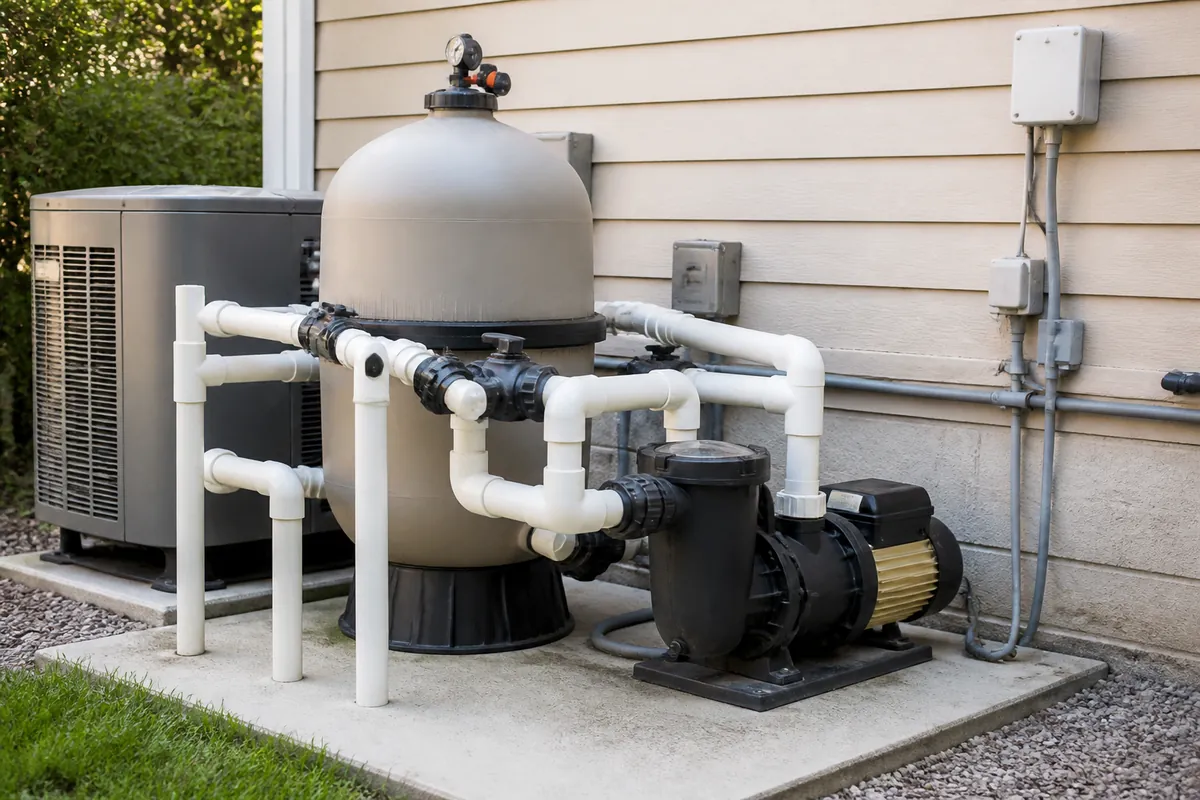
Sun, wind and dry air raise evaporation. A pool in an Arizona summer can drop noticeably even when nothing is wrong. That is why a guess is unreliable.
The bucket test compares the pool's drop with a bucket that sits in the same sun, so evaporation affects both the same way.
Take a bucket, fill it about three quarters with pool water and stand it on a pool step so the two water surfaces match. Mark both levels with tape or a marker, one inside the bucket and one on the pool wall.
Turn off the auto fill and avoid swimming during the test.
After twenty four hours, compare the two marks. If they dropped about the same, the loss is evaporation. If the pool fell further than the bucket, suspect a leak.
Repeat with the pump running, then off. A bigger loss with the pump on suggests a pressure side leak. A bigger loss with it off points to the shell or suction side.
Compare the two marks after a day.
| Result | What it suggests | Next step |
|---|---|---|
| Pool and bucket dropped equally | Evaporation | No action needed |
| Pool dropped more than bucket | Leak | Test with pump on and off |
| Loss only with pump on | Pressure side pipe leak | Book a pressure test |
| Loss only with pump off | Shell or suction side | Ask a specialist |
Check the pump, filter and heater for wet soil and drips. Air in the pump basket may point to a suction leak. Soft ground beside the pad is a hint.
A pressure test on the pool lines separates pipe leaks from shell cracks. Ask the contractor which they handle. See pool leak detection and repair for the options.
If the level is dropping fast, switch the pump off before the water falls below the skimmer, since running it dry can ruin it. Then call. A falling level can also raise the bill, so read about leak detection for the meter test.
Evaporation is the main reason a pool drops, and in the desert it can be substantial. Heat, low humidity, wind and a large surface area all raise the rate. A pool can also lose water to splashing, backwashing the filter, bather carry-out and a cover that is off. These losses are normal and vary by season.
The test is designed to separate normal loss from loss through the shell or plumbing. It does not tell you where a leak is, only whether you have reason to look.
Turn off any automatic fill device and note that rain, heavy use or a pump change will skew the result. Keep the bucket in a shaded spot if possible, since sun on the bucket is part of the comparison. Do the test on a calm day with the pump running normally. Repeat with the pump off for a second reading if the first test suggests a leak.
Be consistent. Record the starting level, the time and the conditions. A reading a day later is more reliable than one a few hours later.
When the pool and the bucket fell by a similar amount, evaporation accounts for it. When the pool fell farther, water is escaping some other way. If the difference is greater with the pump running, suspect the pressure side of the plumbing. If the difference is greater with the pump off, a skimmer, return fitting or shell crack could be the cause.
Common leak points include skimmer throats, light niches, return fittings, equipment pads and underground lines. A leak in a buried line may show as a wet patch or a sinking spot in the yard.
Persistent loss after a careful test calls for leak detection. Specialists use pressure testing, dye and listening equipment to find the source. See pool leak detection and repair. If the yard near the equipment is wet, the buried supply to the house may be involved too, so mention it. A water bill that rises along with pool refills is another reason to book a search, and high water bill leak detection covers the meter side.
A pool's evaporation rate changes with air temperature, humidity, wind and water temperature. A warm, dry, windy day can bring a noticeable drop in a short time. A shaded or covered pool loses less. A heated pool in a cool, dry period can lose more than you would expect. Because the rate changes day to day, a comparison against the bucket is more useful than a guess based on typical figures.
Filter backwashing, a splash zone that sends water onto the deck, a leaking auto-fill valve that is stuck open and a water feature that overflows its basin can all change the level. Check these before assuming a shell leak. A pool that is topped off by an auto-fill can mask a leak completely, so shut the fill off for the test and note how often it has been running.
If you see cracks in the plaster, loose tiles or wet ground near the equipment pad, mention it when you call. Those observations help a leak specialist plan the search.
A leaking pool can show up in the bill before it shows up in the pool. A pump room with a damp floor, soil that stays soft near the shell, or a sudden need to add water more often than before are other hints. The meter test described in high water bill leak detection can help tell whether the loss is in the pool or in the house supply.
Ask a pool professional. Heat, wind and use all matter.
Yes during the test. It hides the loss.
That is usually a pool specialist's job.
It can, especially if auto fill tops it up.
Find out if the pool is losing water to a leak or to the sun, and pin down the pipe or fitting at fault.
Locate water escaping from walls, floors, the yard or irrigation pipe without tearing things open first.
Learn whether a bill spike comes from a leak, a toilet or the sprinklers, and how to confirm it at the meter.
Sudden bill jumps rarely have one cause. Compare leaks, heavy use, sprinklers and billing quirks to see which fits.
Start with the meter, add a few quick fixture checks and read the clues outdoors to learn if water is escaping and where.
A hose bib that drips can also leak inside the wall. Work out whether the handle, the spout or the wall connection is at fault.
Turn the pump off, then call.
Service area centered on Laveen and nearby Maricopa County cities.