Toilet Repair & Installation
Running, rocking, leaking or weak flushing toilets repaired, or a new bowl set.
A toilet that runs, hisses or refills on its own is quietly leaking water. The fix is usually one of three inexpensive parts.
By the Laveen AZ Plumbing team ·
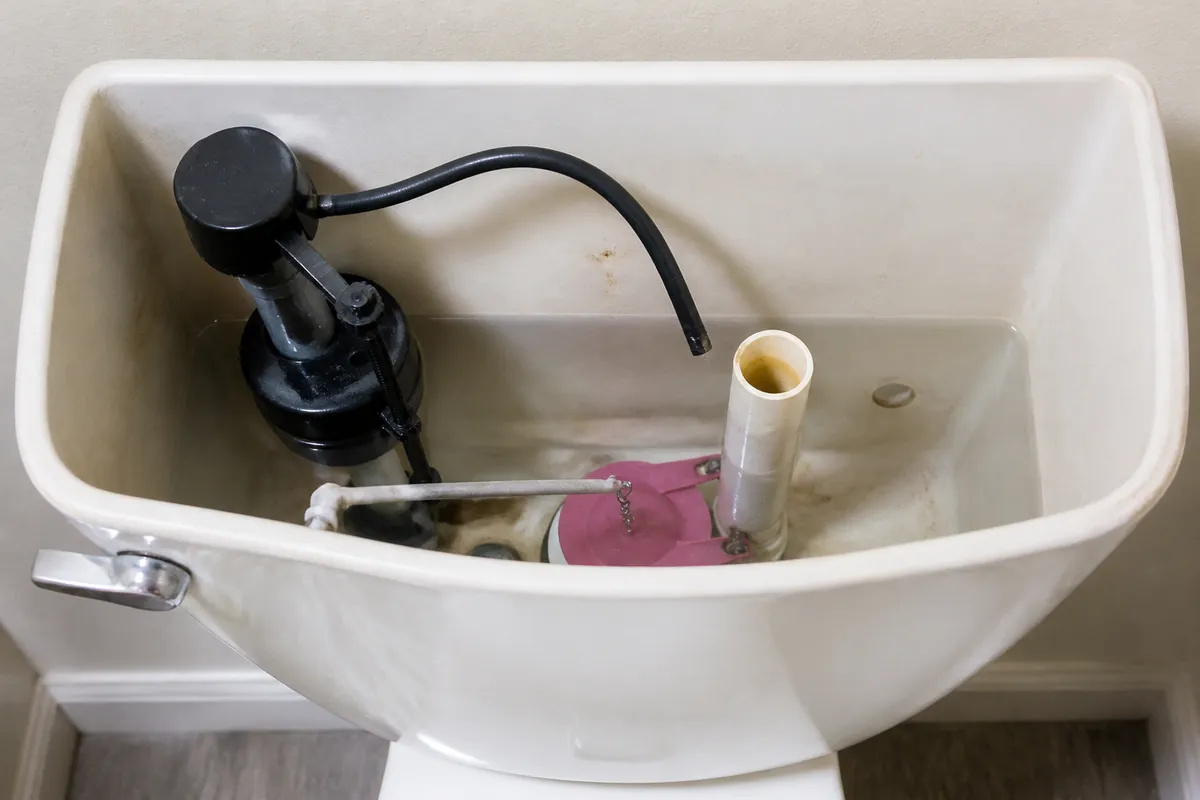
Add several drops of food coloring to the tank water. Wait a quarter of an hour and do not flush. If the bowl water turns the same color, the flapper is letting water through.
No color but the tank keeps refilling means the overflow tube may be taking water, or the fill valve is not shutting off.
A rubber flapper closes the opening at the tank bottom. With age it hardens, warps or gathers scale. Shut the wall valve, flush the tank empty and unhook the old flapper. Buy a replacement that matches the model.
Set the chain with a little slack, then turn the water back on and test.
The fill valve refills the tank. If water runs into the overflow tube, lower the float or adjust the valve height. If it hisses or leaks, replace it. Kits are widely sold, and the swap is a short job.
Hard water scales the parts, so replacement may be needed more often than you expect. See faucet and sink repair for other valve work.
Three parts account for most cases.
| Part | Sign | Typical fix |
|---|---|---|
| Flapper | Dye reaches the bowl | Replace the flapper |
| Fill valve | Hiss or constant refill | Adjust or replace |
| Float or water level | Water flows into the overflow tube | Lower the level |
Tank water belongs roughly an inch beneath the top of the overflow tube. Anything higher runs down the tube without a break. Adjust the float down until the level stops just under that line.
If new parts do not stop the leak, the flush valve seat may be worn, or the tank may be cracked. Older toilets may be worth replacing. Ask what the contractor sees. Toilet repair and installation covers both.
A running toilet is among the most common causes of a high bill. A meter that moves when no one uses water is a clue. See high water bill leak detection if the toilet is not the cause.
A toilet runs when water continues to pass from the tank into the bowl, or when the fill valve keeps adding water because the tank never reaches its shutoff level. These are two different faults. In the first, the flapper or its seat leaks, and the fill valve tops up the tank every so often with a short burst. In the second, the float or fill valve fails to shut off, and water pours down the overflow tube.
Listening helps. A hiss that goes on without a pattern suggests the fill valve. A trickle with a periodic refill suggests the flapper.
Shut the wall valve and flush so the tank drains, then lift the old flapper off the pegs at the foot of the overflow tube. Bring it along to the store, because styles and sizes differ. Hook on the new one, attach the chain with a bit of slack and reopen the valve and run the dye test again.
A flapper that is hard, warped or coated with slime will not seal. Cleaning the seat with a cloth sometimes helps, but replacement is cheap and quick. Check also that the chain does not catch under the flapper when it drops.
Most modern fill valves have an adjustment that raises or lowers the water level. The level should stop an inch or so under the top of the overflow tube. If the valve will not shut off at any setting, the seal inside has probably failed, and replacing the entire valve is usually simpler than rebuilding it.
A refill tube that sits inside the overflow pipe should end above the water line. If it dips below, water can siphon back in a way that looks like running.
Hard water speeds the wear on rubber parts and leaves scale on seats and seals. A flapper that might last many years in softer water can fail earlier here. Heat in a garage or utility closet can also affect rubber. Check the tank parts if the toilet has not been serviced in a long time.
Silent leaks are the costly ones. A small running toilet may add noticeably to a bill over a month. If new parts do not stop the problem, or the wall valve and supply line leak, see toilet repair and high water bill leak detection.
Sometimes a toilet runs because the handle sticks, the lift arm sits crooked or the chain is too short and holds the flapper partly open. Check that the handle returns to rest on its own. Make sure the chain has about a half inch of slack. A tangled chain can be reset by removing a link or two or by moving the clip.
Corroded parts can bind. If the handle nut is stiff, a little patience and a gentle turn avoids cracking the porcelain.
A running toilet wastes water and money, and the sound can disguise how much. Even if the toilet seems to be refilling only occasionally, a modest leak over weeks may add up to a notable amount on the bill. The dye test takes minutes and gives a clear answer. If the problem is more than a part swap, a contractor can check the flange, the supply line and the tank bolts at the same time.
Over a month the loss can add up to a lot. Dye in the tank shows whether it is leaking.
Often yes. Many parts replace by hand.
A leaking flapper lets water seep until the fill valve refills the tank.
Only if repairs do not hold or the fixture is cracked.
Running, rocking, leaking or weak flushing toilets repaired, or a new bowl set.
Learn whether a bill spike comes from a leak, a toilet or the sprinklers, and how to confirm it at the meter.
Drips, stuck handles, balky stop valves, washer boxes and hose bibs.
Weak, partial or absent flushing can come from a clog, a tank fault or a weak flush. Run a short check to see which.
Sudden bill jumps rarely have one cause. Compare leaks, heavy use, sprinklers and billing quirks to see which fits.
Start with the meter, add a few quick fixture checks and read the clues outdoors to learn if water is escaping and where.
Call and explain what you have tried. A dispatcher can put you through to a contractor.
Service area centered on Laveen and nearby Maricopa County cities.